
Weighbridge Manufacturer
Electronic Weighbridge
Weighbridge Suppliers
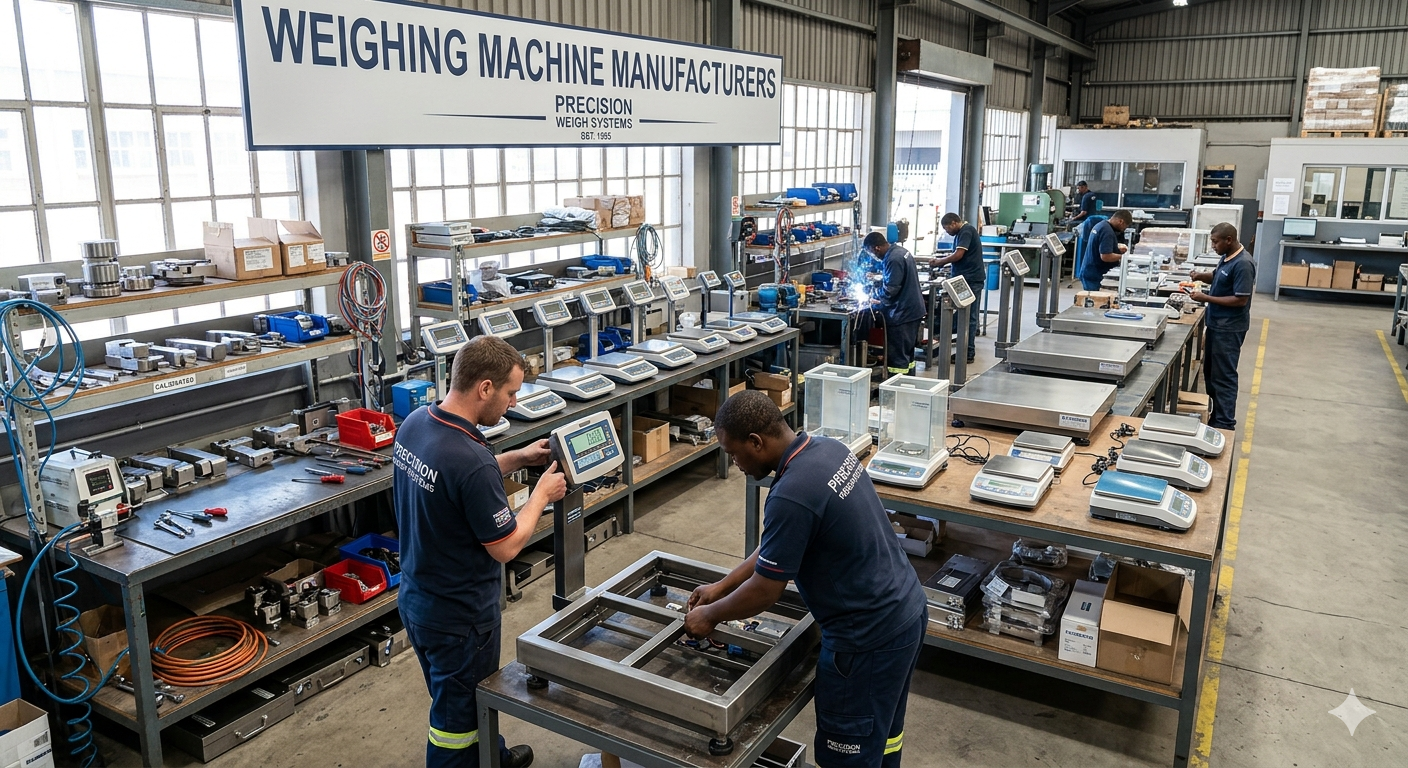

For decades, weighing machines have sort of done one key thing really well: measuring weight in a way that is accurate. Be it in manufacturing plants, warehouses, logistics hubs, or even at retail counters, these setups have been the real backbone for how operations run smoothly. Still, the function of weighing equipment is moving fast now, not slowly like before.
Nowadays, companies don’t really want those basic, stand-alone weighing systems that just show a number and that's it. They are looking for more. Intelligent solutions now, like something that gives real-time visibility, helps automate steps, and actually backs data-driven decisions. Because of that, weighing machine makers are leaning into tech like the Internet of Things (IoT), cloud connectivity, artificial intelligence, and smart analytics.
In many cases, today’s weighing systems are becoming more than simple measuring tools. They are connected devices that can boost productivity, strengthen quality checks, support inventory tracking, and feed business intelligence too.
In this blog, we’ll dig into how IoT and smart data are reshaping the weighing industry and why more organizations are choosing to invest in intelligent weighing solutions, not just traditional ones.
Mechanical or simple electronic devices were the main types of traditional weighing systems. Independent reliable weighings were their sole function and capabilities were limited.
Digital technologies brought a lot of new features, such as the following:
The current wave of breakthroughs is an accelerant for digital technology. Today, weighing instruments incorporate sensors, wireless transmissions, cloud computing, and analytical solutions through which enterprises can run their operations remotely.
Such radical change is less common in sectors that require exactness, strictness, and efficiency.
Internet of Things (IoT) is a term for a network of connected devices that send and receive each other on the internet at any time.
Weighing machines integrated with IoT are able to:
Here an industrial scale equipped with IoT continuously exchanges information with ERP systems; top executives are, therefore, capable of making well-thought-out, timely decisions even when off-premises.
Being connected in this way eliminates the need for manually logging data and cuts down on the chances of errors caused by humans as well as improves whole operation effectiveness.
Smart weighing systems offer the possibility of getting up-to-date information as a big perk.
Sometimes, operators perform the weighing and collect the values before entering them after some time to a spreadsheet or software system. Time gaps, discrepancies and inconsistencies in data can surface as the result of this process.
Only with IoT data is it captured automatically and sent to the intended recipient right away without any human intervention.
Companies are capable of keeping an eye on:
Having the insight at the speed of time enables the business to discover the limiting factors very soon and to take the leading line in tackling the operational problems.
For instance, in the manufacturing locations, supervisors who are tidily checking the running usage along with the production plan and adjusting based on usage may also be ensured.
Weight measurement plays a vital role in industries like pharmaceuticals, food processing, chemicals, and manufacturing.
Smart weighing systems contribute to quality assurance by:
In case an Industrial Weighing Machine finds measurements beyond the allowed limits, automated alerts can inform operators straight away.
This allows businesses to:
Consequently, the production line becomes more dependable and the customers are happier.
Downtime of equipment is a serious concern, as it causes financial losses for any business.
Conventional maintenance methods mainly involve repairing equipment only after a breakdown happens. This is how sudden disruptions and costly restructuring & repair are precipitated.
Weighing machine makers nowadays are getting and using IoT and predictive analytics data, among other things, in order to solve this problem.
Networked weighing instruments are capable of tracking:
The very sophisticated packages decide by going through these data points which indications might signal a failure soon.
Predictive maintenance features:
Rather than waiting for the breakdown to happen, companies can have maintenance carried out on their equipment as a standard practice, thereby avoiding the downtime of production.
The cloud is the new norm in modern weighing technologies.
Rather than keep the information locally, users have the option to safely transfer data to cloud services where they can retrieve it at any time from any device.
Cloud-enabled weighing machines thus bring the following:
Companies operating from multiple sites will achieve a view of all data at one single point through a dashboard.
The moment a manager, an employee or a higher-level official accesses the system, all of them see the very same data.
Cloud provides archiving and restoration facilities, which are the main causes of data loss prevention.
So the weighing industry is kind of switching gears big time. What used to be a straightforward measurement device now has become an actually useful source of operational intelligence. With IoT connectivity plus cloud platforms and predictive analytics, and also real-time monitoring, today’s modern Weighing Machine Manufacturers are basically enabling businesses to boost efficiency, improve precision, and sharpen decision-making.
An advanced industrial weighing machine now does so much more than simply figure out weight. It gives practical signals and actionable insights that push productivity, strengthen quality control, and support operational excellence. And as more organizations keep moving through digital transformation, investing in smart weighing technologies is going to matter even more, not just later but quickly.
If you’re a business looking for new, dependable weighing solutions, Trakblaze is focused on delivering these advanced technologies that blend precision, seamless connectivity, and intelligent data management together. When companies adopt these modern weighing innovations, they can unlock additional levels of efficiency, and they’ll be better set up to meet the future of smart industrial operations.
Also Read: How to Choose the Right Weighbridge Manufacturer for Mining and Heavy Logistics in India